She Didn’t Just Graduate—She Belonged
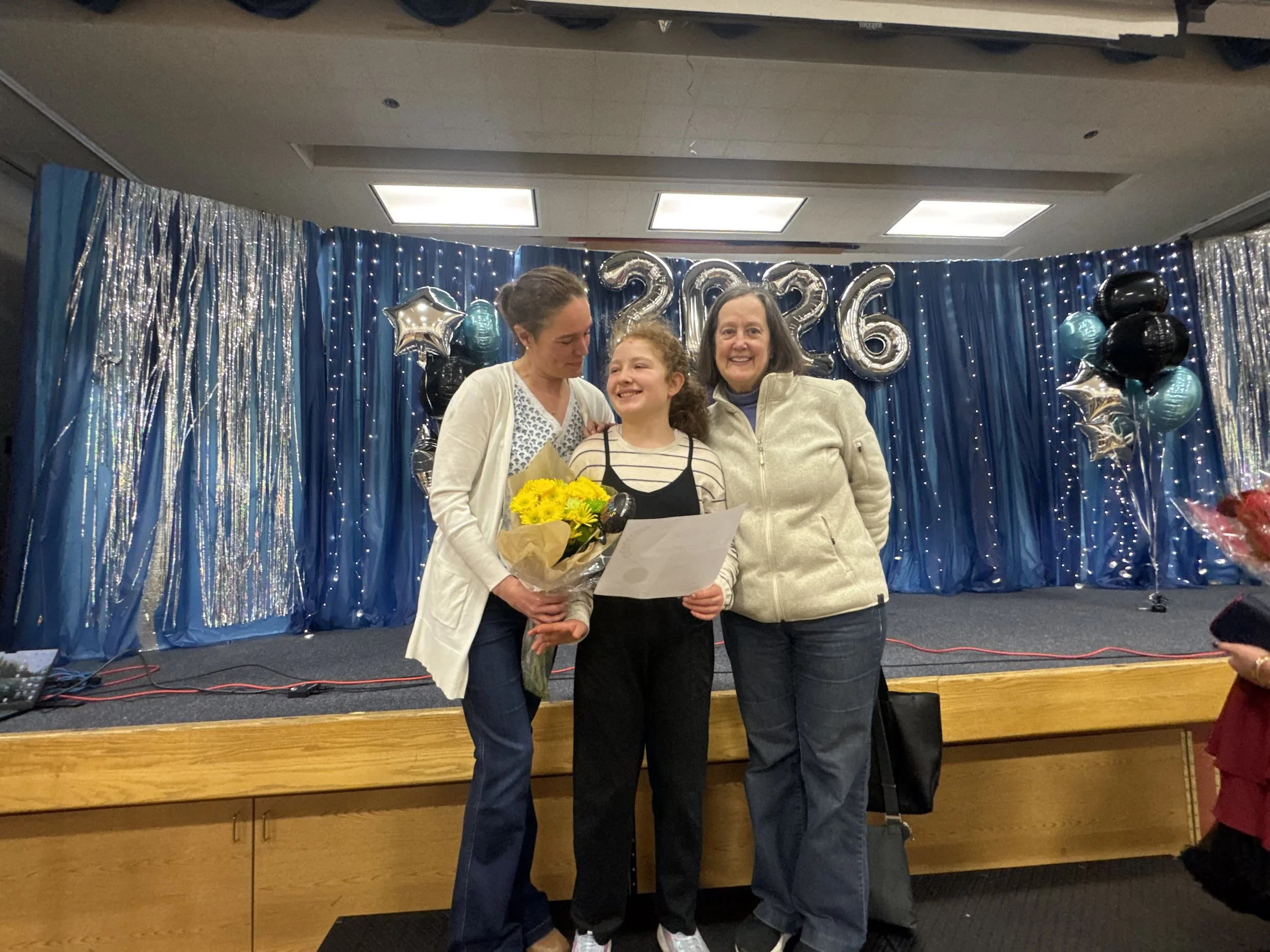
Eliza graduated from elementary school this week.
There are milestones you imagine easily when your children are born: first steps, first words, backpacks too large for little shoulders, kindergarten classrooms with names printed carefully on cubbies. And then there are milestones you learn to hold more carefully, the ones you stop assuming and begin hoping for quietly over time. Middle school was never something I took for granted, and as we sat in her transition meeting recently discussing placements, supports, staffing, and what could or could not be provided next year, I found myself thinking less about schedules and services and more about belonging.
Because inclusion is not simply about proximity. It is not just whether a child spends part of the day in a general education classroom or attends lunch and recess with peers. Inclusion is about whether a child is truly known within a community. Whether their presence is expected instead of accommodated reluctantly. Whether they are woven into the ordinary rhythms and relationships that make up a school day.
For over five years, Eliza attended an elementary school filled with sweet classmates and an incredible team of teachers, therapists, aides, specialists, and staff who cared deeply for her. That does not mean inclusion was automatic or perfect. There were still hard conversations, missed opportunities, moments she was unintentionally overlooked, and times I had to advocate fiercely for her to remain in spaces where she belonged. Inclusion was never guaranteed simply because it was written into a plan. It required intentional people who were willing to keep choosing it again and again.
But what stands out most when I look back on these elementary years is not the difficulty. It is the people.
It is the classmates who learned naturally how to wait for Eliza’s words without rushing her. The children who celebrated her victories as if they were ordinary because, to them, they were. The teachers who presumed competence even when progress came slowly. The staff members who greeted her by name in the hallway every morning. Over time, these children learned things no curriculum map could fully teach them. They learned that communication is bigger than speech, that value is not tied to speed or productivity, and that human beings are not more worthy because they are more independent.
And inclusion changed them too.
Before we moved to Alaska, we experienced what it looked like for a district to assume that children with disabilities should remain part of the fabric of everyday school life whenever possible. Support came to the student instead of automatically removing the student from the community. Adaptations existed without diminishing dignity. It was not flawless, because no educational system is, but it communicated something profound to children over and over again: you are one of us.
Since moving, I have seen more clearly how fragile inclusion can become when systems are strained. Special education departments facing enormous budget cuts. Vacant positions disappearing instead of being filled. Teachers stretched impossibly thin. Pullout models becoming the default because they appear easier to manage in overwhelmed systems. And yet the more I watch these conversations unfold, the more convinced I become that inclusion is not an educational luxury. It is not charity. It shapes the moral culture of a school.
We know children rise or fall according to the expectations surrounding them. We know separation easily becomes self-perpetuating. And we know that when disabled children are consistently removed from shared spaces, everyone loses something. Other children lose opportunities to develop patience, flexibility, empathy, and the understanding that humanity has never been measured by efficiency alone.
As Eliza walked across the stage at her elementary school graduation, I found myself overwhelmed not simply because she had reached this milestone, but because so many people had helped carry her there. Her elementary years were shaped by people who kept making room for her. Not perfectly. Not effortlessly. But faithfully. And because of that, school became more than a place she attended. It became a place where she was known.
I do not know exactly what middle school will hold for Eliza. Like most parents of disabled children, I have learned that every transition carries both hope and grief together. But I know every child deserves more than access to a building. They deserve to belong there.